Tuesday, 21 May 2013

One year ago Abdelbaset Al-Megrahi died in Tripoli

Abdelbaset al-Megrahi died one year ago on the 20th May 2012. Here are extracts from the statement that Justice For Megrahi issued on that occasion:

Abdelbaset al-Megrahi has now died without having been able to clear his name of the destruction of Pan Am flight 103 on the 21st of December 1988 during his lifetime. Now all those politicians and Megrahi-guilt apologists who regard compassion as being a weakling's alternative to vengeance, who boast of their skills at remote medical diagnosis, and who persistently refuse to address the uncomfortable facts of the case, will doubtless fall silent. Finally, the ‘evil terrorist’ has been called to account for himself before a “Higher Power”.

The prosecution case against him held water like a sieve. We are expected to believe the fantastic tale of the Luqa-Frankfurt-Heathrow transfer of an invisible, unaccompanied suitcase which miraculously found itself situated in the perfect position in the hold of 103 to create maximum destructive effect having eluded no fewer than three separate security regimes. There is no evidence for any such luggage ever having left the ground in either Malta or Germany, it is mere surmise.

 
Not only that but we have accusations of the key Crown witness having been bribed for testimony; a multitude of serious question marks over material evidence, including the very real possibility of the crucial fragment of PCB having been fabricated; discredited forensic scientists testifying for the prosecution; and, most worryingly, allegations of the Crown’s non-disclosure of evidence which could have been key to the defence. Added to which, evidence supporting the alternative and infinitely more logical ingestion of the bomb directly at Heathrow was either dismissed at the trial or withheld from the court until after the verdict of guilty had been returned.

 The Crown and successive governments have, for years, acted to obstruct any attempts to investigate how the conviction of Mr al-Megrahi came about. Some in the legal and political establishments may well be breathing a sigh of relief now that Mr al-Megrahi has died. This would be a mistake. Many unfortunates who fell foul of outrageous miscarriages of justice in the past have had their names cleared posthumously.
 
However long it takes, the campaign seeking to have Mr al-Megrahi’s conviction quashed will continue unabated not only in his name and that of his family, who must still bear the stigma of being related to the ‘Lockerbie Bomber’, but, above all, it will carry on in the name of justice. A justice which is still being sought by and denied to many of the bereaved resultant from the Lockerbie tragedy.

 This case has now become emblematic of an issue which affects each and every one of us and poses some profoundly basic questions which we ignore at our peril, namely: what do we perceive justice to be, what role ought it to play in our society and whom should it exist to serve? Our laws and how we apply them to our society are the most fundamental descriptor of how we function as a cohesive and coherent entity. They are effectively a portrait of our identity as a people. If, through complacency, we permit cosy, established authority to dictate the terms and to brush under the carpet concerns over how justice is defined and dispensed for the sake of convenience, expediency and reputation, we will only have ourselves to blame for the consequences.

The Scottish Cabinet Secretary for Justice, Kenny MacAskill, says that “Scotland's Criminal Justice system is a cornerstone of our society, and it is paramount that there is total public confidence in it.”
 
Scotland’s independent and professional arbiter in the matter of referrals to the Court of Appeal, the SCCRC, believe that, on no fewer than six grounds, Mr al-Megrahi may have suffered a miscarriage of justice at Zeist.
 
Whether or not the courts are the right and proper platform to deal with this case, the conviction has been in the hands of the High Court of Justiciary since 2001 producing no resolution whatsoever and, moreover, how amenable are the courts now likely to be towards sanctioning another appeal given that they have been invested with new powers which allow them to reject applications which question their own judgements? Fine words are not enough. Action is required. 
 
If Scotland wishes to see its criminal justice system reinstated to the position of respect that it once held rather than its languishing as the mangled wreck it has become because of this perverse judgement, it is imperative that its government act by endorsing an independent inquiry into this entire affair. As a nation which aspires to independence, Scotland must have the courage to look itself in the mirror.


Signed:
Ms Kate Adie (Former Chief News Correspondent for BBC News).
Mr John Ashton (Author of ‘Megrahi: You are my Jury’ and co-author of ‘Cover Up of Convenience’).
Mr David Benson (Actor/author of the play ‘Lockerbie: Unfinished Business’).
Mrs Jean Berkley (Mother of Alistair Berkley: victim of Pan Am 103).
Mr Peter Biddulph (Lockerbie tragedy researcher).
Mr Benedict Birnberg (Retired senior partner of Birnberg Peirce & Partners).
Professor Robert Black QC (‘Architect’ of the Kamp van Zeist Trial).
Mr Paul Bull (Close friend of Bill Cadman: killed on Pan Am 103).
Professor Noam Chomsky (Human rights, social and political commentator).
Mr Tam Dalyell (UK MP: 1962-2005. Father of the House: 2001-2005).
Mr Ian Ferguson (Co-author of ‘Cover Up of Convenience’).
Dr David Fieldhouse (Police surgeon present at the Pan Am 103 crash site).
Mr Robert Forrester (Secretary of Justice for Megrahi).
Ms Christine Grahame MSP (Member of the Scottish Parliament).
Mr Ian Hamilton QC (Advocate, author and former university rector).
Mr Ian Hislop (Editor of ‘Private Eye’).
Fr Pat Keegans (Lockerbie parish priest on 21st December 1988).
Ms A L Kennedy (Author).
Dr Morag Kerr (Secretary Depute of Justice for Megrahi).
Mr Andrew Killgore (Former US Ambassador to Qatar).
Mr Moses Kungu (Lockerbie councillor on the 21st of December 1988).
Mr Adam Larson (Editor and proprietor of ‘The Lockerbie Divide’).
Mr Aonghas MacNeacail (Poet and journalist).
Mr Eddie McDaid (Lockerbie commentator).
Mr Rik McHarg (Communications hub coordinator: Lockerbie crash sites).
Mr Iain McKie (Retired Superintendent of Police).
Mr Marcello Mega (Journalist covering the Lockerbie incident).
Ms Heather Mills (Reporter for ‘Private Eye’).
Rev’d John F Mosey (Father of Helga Mosey: victim of Pan Am 103).
Mr Len Murray (Retired solicitor).
Cardinal Keith O’Brien (Archbishop of St Andrews and Edinburgh and Cardinal in the Roman Catholic Church).
Mr Denis Phipps (Aviation security expert).
Mr John Pilger (Campaigning human rights journalist).
Mr Steven Raeburn (Editor of ‘The Firm’).
Dr Tessa Ransford OBE  (Poetry Practitioner and Adviser).
Mr James Robertson (Author).
Mr Kenneth Roy (Editor of ‘The Scottish Review’).
Dr David Stevenson (Retired medical specialist and Lockerbie commentator).
Dr Jim Swire (Father of Flora Swire: victim of Pan Am 103).
Sir Teddy Taylor (UK MP: 1964-2005. Former Shadow Secretary of State for Scotland).
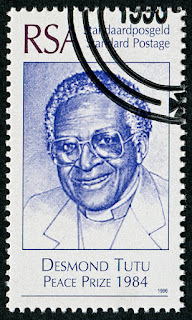
Archbishop Desmond Tutu (Nobel Peace Prize Winner).
Mr Terry Waite CBE (Former envoy to the Archbishop of Canterbury and hostage negotiator).

Sunday, 28 April 2013

From El Salvador to Lockerbie


A little publicised news item features on some BBC programmes this week.

 In El Salvador, a campaign is under way for the beatification of former Archbishop Romero, shot while conducting mass in 1980 by a murder squad employed by the El Salvador government, at that time backed by the US government and CIA. 

The connection to Lockerbie begins with the November 1995 publication of a formerly secret email written by Vincent Cannistraro, the man who would in time be appointed head of the CIA team investigating the Lockerbie bombing. 

Just five years after the Romero assassination, Cannistraro was part of a CIA/White House Restricted Inter-Agency Group (RIG) managing a covert guerrilla war against the Nicaraguan government, by proxy forces known as the "Contras".

Lt. Colonel Oliver North, as Cannistraro's controlling officer, had secretly organised the sale of arms to Iran, and was using the profits from those sales to fund and arm the Contra forces. The US objective was to remove the left wing Nicaraguan government and replace it with amenable politicians friendly to America. Many tens of thousands of Nicaraguan citizens and officials were murdered during the war.

Meanwhile Cannistraro and North conducted a parallel programme of friendly cooperation with the government of El Salvador.

The downing of a plane over the Nicaraguan border carrying a Eugene Hasenfus, a mercenary employed by North’s cohorts on the Nicaraguan supply routes, threatened to derail the entire Iran-Contra affair. Hasenfus had been captured by the Nicaraguans, in his pocket a notebook containing information about the Iran-Contra network. With Hasenfus were other members of the supply team.

An emergency meeting of the RIG was called.  Cannistraro, as senior member of the group, minuted the discussion and followed that up with advice and instruction to members of the group and their associated staff.

In the words of Tom Blanton of the US National Security Archive Library (NSA) and author of the November 1995 disclosures White House Email, these instructions are proof of a government in major denial. "This October 8th 1986 email gives the anatomy of the cover-up. It lists the lies decided on by the Restricted Agency Group (RIG) managing the contra war."

Cannistraro’s record of the meeting indicates confidence that the American people will gullibly accept that there has been no U.S. Government involvement. There is too an indication of the subtle and ever-growing Orwellian control exerted by the White House over the media. This account finely balances the advantage of claiming that the captured mercenaries are brave men, against the tactic of ignoring the whole thing.

"[8th Oct. 1986] 16:08 VC [CANNISTRARO] To: JOHN M. POINDEXTER. SUBJECT: DOWNED PLANE. At RIG [Restricted Interagency Group] meeting with Elliott Abrams today the question of the captured Americans held by the Nicaraguans was discussed. Following decisions were made:

-- Demands for consular access would continue. Elliott thought Nics [Nicaraguans] would accede to our request today. (He later called me to say the Nics had still not responded and we should be prepared to escalate tomorrow if there is no movement. Believes we may have to make this a "hostage crisis" to exert leverage on [Nicaraguan] Sandinistas.)

-- El Salvador will deny [claims of ] any facilitative support to contra flights. By secure phone to Embassy, we received notice Duarte agreed that GOES [Government of El Salvador] would deny everything. Salvador asked that U.S. Government not refer newsmen to El Salvador for follow-up.

-- Press Guidance was prepared which states no U.S.G. [U.S. Government] involvement or connection, but that we are generally aware of such support contracted by the Contras.

-- UNO [United Nicaraguan Opposition] to be asked to assume responsibility for flight and to assist families of Americans involved. Elliott will follow up with Ollie [North] to facilitate this.

-- ARA [U.S. State Department Inter-American Bureau] will attempt to identify appropriate legal counsel and ask UNO to engage him. Lawyer will be asked to donate services pro bono. Alternatively, private money can be found, according to Elliott.

-- HPSCI [House Permanent Select Committee on Intelligence] and SSCI [Senate Select Committee on Intelligence] have been briefed and there were no problems.

--Elliott said he would continue to tell the press these were brave men and brave deeds. We recommended he not do this because it contributes to perception [that the] U.S. Government inspired and encouraged private lethal aid effort."

The November 1995 NSA publication White House Email was only a brief selection from the four thousand available. And the four thousand were themselves only part of ten thousand originally existing in 1986 in the basement of the White House.

When Iran-Contra was exposed, the leader of the conspiracy Colonel Oliver North, and an aide of White House chief Admiral John Poindexter descended to the basement of the White House and commenced the deletion of all secret files concerning Iran-Contra and associated matters.

Over the previous three years an estimated seventy thousand Central American civilians and officials had been murdered, and leaders of several Central American states threatened, bribed or blackmailed. The White House emails and telexes contained the entire brutal history.

North and the Poindexter aide deleted some six thousand emails and telexes before they were discovered. The US courts then stepped in to halt all further deletions. What was in the six thousand deleted may never be known.

Cannistraro continued his illustrious career and moved to the White House Libyan desk to join another of his National Security Committee colleagues Howard Teicher. Their agenda was the destruction of the Gaddafi regime in Libya by the use of propaganda and what they called "disinformation". 

Two years later Cannistraro was appointed head of the CIA team investigating the Lockerbie bombing. It was on his watch that a tiny fragment of timer board was said to have been found at the Lockerbie crash site. The fragment was "proved" by the FBI to have been part of a batch of timer boards sold to Libya in 1985.

It is now conclusively demonstrated by two independent and experienced scientists that the Lockerbie fragment did not come from that batch of timers sold to Libya. It appears to be from a "rogue" timer specially made by persons unknown. Questions are being asked as to whether it is even a rogue fragment made to appear like a real timer fragment.

We invite the Scottish Government and Crown Office to consider these recorded and provable facts.


Thursday, 11 April 2013

Press release: Lockerbie film


We are pleased to announce that a major feature film is to be based on our manuscript, in a joint venture by Amber Entertainment and Forecast pictures.
 
 Amber Entertainment is headed by the highly successful producer Ileen Maisel

Forecast picture's CEO is leading producer Jean Charles Levy.

The exclusive story in the Hollywood magazine "Variety" can be accessed here.

Further announcements regarding director, leading actors and other production developments will be made in due course.


Saturday, 9 February 2013

While Good Men Do Nothing


9th February 2013
 
Dear Lord Advocate, 
 
With the publication almost a year ago of the book Megrahi: you are my jury, it became public knowledge that there is scientific proof that the fragment of circuit board led in evidence at Zeist and known as ‘PT35b’ although mimicking circuit boards owned by Libya, could never have come from any such board.

This circuit board fragment was the crucial link at trial, suggesting that the bomb could have come from Malta, since it represented a fragment from a long running timer.

I am horrified to hear this week that Urs Bonfadelli (Thuring’s production manager, & maker of the MEBO boards), Dr Chris McArdle and Dr Jess Cawley, the three experts most involved in defining the significance of the discrepancy over the metallurgy of ‘PT35b’ have never been approached by the Crown Office or the Dumfries and Galloway police in connection with this devastating discovery during the whole of the time since publication of Mr Ashton’s book.

I must therefore ask that you will immediately launch an inquiry into all matters surrounding ‘PT35b’, its origin, and its discovery inside a Dumfries and Galloway police evidence bag.

It is, Sir, now over 24 years since my daughter Flora was murdered at Lockerbie. As her father I have a right to know who murdered her and why her life was not protected. Such lethargy as this is intolerable.

Adherence to the Zeist verdict, in the face of the immediate criticisms of the UN’s special observer Professor Hans Koechler, and those of Professor Robert Black QC, and many others, along with the SCCRC findings, and now this metallurgical finding, while at the same time refusing to investigate all these apparently well supported allegations would in the event that those allegations are found to be justified, be seen as dereliction of the duty of the Crown Office to deliver timely justice. Effectively it would also amount to protection for the real perpetrators.

May I remind you of these words often attributed to philosopher Edmund Burke:-

All that is necessary for the triumph of evil is that good men do nothing.

I request therefore that you immediately commence a credible investigation, into all these matters, specifically including the circuit board fragment ‘PT35b’, its origin, and its finding inside a Dumfries and Galloway police evidence bag, without any further delay.

Further, in view of the extraordinary public statement made by the Crown Office concerning the 'allegations of criminality', lodged by the group known as JFM, before even receiving their supporting evidence, and accusing them of being fantasist conspiracy theorists, I feel that this letter should be made publicly available at once. I have therefore copied it elsewhere.

I am proud simply to be involved in a search for the truth, concerning my daughter’s murder, and not in any attempt to denigrate others in the process.

Yours faithfully,
Dr Jim Swire

Friday, 1 February 2013

The Current status


On 21st December 2012, US relatives of those Americans who died aboard the PanAm 103 747 over Lockerbie chose to issue a petition to their government.

Their petition majors on aspects of the relationship between their own country and Libya – the Libya of both before and after Colonel Gaddafi’s death. It can be read on The Lockerbie Case blog (
http://lockerbiecase.blogspot.com/2012/12/commemoration-of-pan-am-103-at.html).

There can be no doubt that under the late Colonel, Libya was responsible for much mischief, murder and mayhem in the world. In the UK we cannot forget the supply of Libyan arms to IRA terrorists, providing weapons and explosives for the murder of both soldiers and civilians in both Northern Ireland and the UK
mainland.


In 1984 the FBI had warned the Irish concerning a shipment of about 7 tons of arms and explosives from the USA heading for Ireland, which was intercepted. But In another major victory for intelligence in 1987 the ship the Eksund was stopped at sea and found to be loaded with Libyan guns and explosives intended for the Provisional IRA. These arms would have bolstered the weapons obtained from America in the previous decade which had included the deadly Armalite rifle, the image of which can still be seen depicted on Belfast gable ends.

For many Irish Americans the cause pursued by the IRA/Provos was seen as that of freedom fighters, a euphemism for those who clandestinely and indiscriminately kill for their cause.

Not being an American nor claiming to understand the mindset of the ‘average American citizen’, nor having any access to their governmental or intelligence organisations, I feel I have no right to criticise the direction which the American relatives are now taking in their search for the truth about the tragedy of Lockerbie. All that can be said I think about the content of their petition is that to seek to draw together many different aspects of the relationships between Libya and America is to risk confounding the search for the true perpetrators of Lockerbie, for it starts from the assumption that Libya ‘must’ have been involved.

This presumption of Libyan guilt is founded of course upon the evidence led and the verdict reached at the Lockerbie trial in Zeist, 12 years ago. Apart from that there have been claims and counter claims about how others in the Gaddafi regime might have been involved. These claims belong in the hall of smoke and mirrors created by national and international intelligence and the politicians to whom they report. I certainly, and I suspect the American relatives, cannot be certain where the truth lies in such an arena.

The only apparent solid foundation for the notion of Libyan guilt is the Zeist verdict against the Libyan, Megrahi. That is now being used in this petition as a foundation for exploring multiple other aspects of Libyan/US relations over the decades. That in turn makes it all the more important to examine the legitimacy of that verdict.

Whether or not higher echelons of Gaddafi’s regime were involved in Lockerbie I do not know. The strange co-operation of the UK in assisting in Musa Kusa’s escape from Libya to the Middle East certainly suggests that he was seen as an intelligence asset in the West, but whether that included any aspect of Lockerbie we have of course no idea. When I met him in 1991 I found him an intimidating central figure in the Colonel’s regime, but was never faced with meeting Senoussi, widely known as a brutal killer on behalf of the dictator. Both men’s names have been co-opted into this petition now created by American Lockerbie families. For me they remain denizens of the hall of mirrors too.

My sad task here is to question the one foundation which seems to me to underlie the US relatives’ petition; namely the conviction of Megrahi. I bitterly regret that in doing so I have to challenge the deeply held belief concerning the verdict against Megrahi among equally bereaved families in the US, for to do so must disturb the relative tranquillity (‘closure’) which many feel they have achieved in the lee of this verdict. Even closure however can be a false haven if the facts on which it is based are untrue.

My fervent wish is that those who do shelter in the lee of this verdict will look objectively at the facts now known to surround it. Tough but better to venture out of the shelter into the storm again if one wants to reach the real safe haven of provable truth. Below is a brief summary of the story we heard at Zeist, together with sufficient of the reasons why it is unsafe, some of which emerged in the court, many of which have emerged later.

For those who wish to make their best effort to understand the discussion I recommend a book published in February of 2012. It is written by John Ashton, who spent years working on the legal aspects of the case. At Zeist there was no jury, and the book’s title invites the reader to assume that role. Megrahi: You are my jury is published by Birlinn of Edinburgh (ISBN-13: 978 1 78027 015 9) and is available from Amazon.com.

On the very day it was published, this book was described as ‘an insult to the (Lockerbie) relatives’, by the UK Prime Minister’s Office.

I hope that many will simply read it with an open mind. I do not believe that Downing Street can have done so.

In the hope of simplifying what some regard as an impenetrably complex story here is a simplified version of what seems to have happened. Please check it out against what is actually known to be true.

The months preceding Lockerbie
:

In July 1988 an American warship had accidentally shot down an Iranian Airbus (Iran Air flight 655) killing 290 innocent people.

Iran swore revenge.

America awarded a medal to Captain Rogers, the ship’s captain.

In October 1988 the West German police broke up a cell of Palestinian terrorists operating in Neuss near Frankfurt, but really emanating from Syria.

In doing so the BKA police recovered a number of IED bombs from the Neuss flat. Unfortunately they also missed some of them, which disappeared into the terrorist world. These IEDs were triggered by sensing the drop in air pressure when a plane takes off, they also had inbuilt timers, which were not adjustable and meant that such devices would always explode 30-45 minutes after take off. They were the leading design available to terrorists for destroying aircraft in flight. The Syrian group using them were closely allied to Iran.

The fatal Lockerbie flight lasted 38 minutes.

It was the hearing of this forensic evidence from the German expert, Herr Gobel in the court that first alerted the writer to the improbability of the Malta story. Why launch a bomb from there with a long running and fully adjustable timer, and have it explode just 38 minutes into the flight when it could have been set for many hours after the target flight had left Heathrow?

Some of the arrested conspirators were released promptly by the BKA, despite having been arrested with one of these IEDs actually in their possession at the time of arrest. This extraordinary decision seems another portal into the hall of mirrors.

According to CIA sources the terrorist group involved received significant funding from Iran immediately after Lockerbie.

The prosecution case at Zeist
: The story was that Megrahi, aided and abetted by Fhimah had put a suitcase containing the bomb aboard Air Malta flight KM180 as Megrahi passed through Luqa airport on 21st December 1988.

The suitcase, suitably labelled was then claimed to have passed through Frankfurt airport where it was transferred to a PanAm feeder flight (PA103A) to Heathrow, there it was transferred again, this time into a already partly loaded container, containing some bags which had been loaded into it at Heathrow before the
arrival of PA103A from Frankfurt. The full container, now containing luggage from both Heathrow and Frankfurt was then placed in the hold of PA103 itself.


In order for all this to be confirmed it was necessary to link the two Libyans to the suitcase and explain how it might have survived the complex route proposed only to explode 38 minutes out of Heathrow. In order to have done so, their bomb would have had to have contained a long running timer.

There was not a scrap of evidence led in court that any such suitcase had been loaded onto the Air Malta flight. Their Lordships simply described this evidence deficit as ‘a difficulty for the prosecution’.

As for the long running timer required for a flight from Malta to Lockerbie via Frankfurt and Heathrow, the prosecution produced a fragment of timer circuit board, allegedly retrieved from the Lockerbie wreckage and found in a police evidence bag. It was claimed to have come from a circuit board in a timer bought
by Libya from a Swiss firm, MEBO, well before Lockerbie. These timers , had one been used, could have been adjusted to explode over the Atlantic or even over New Jersey.


The fragment appeared to have been part of such a timer’s circuit board.

However what the court did not know was that the metal layers on the circuit elements of the fragment did not match those on the Libyan boards, although looking exactly like them to the naked eye.

This difference was known to the
prosecution before the trial. Its significance is explained in detail in Megrahi: you are my jury.

Although the prosecution forensic officer knew of this difference and recorded it in his notes, he told the court that the fragment was ‘similar in all respects’ to the Libyan circuit boards.

The manufacturer of the circuit boards sold to Libya before Lockerbie has confirmed by affidavit that his firm did not use, nor even have the equipment necessary for manufacture of, circuit boards by the ‘pure tin’ process found on the curious and apparently incriminating fragment.

Although the anomaly over the fragment was known to the prosecution well before the trial, its true significance did not come to the attention of Megrahi’s defence until his second appeal in Edinburgh.

It did however come to the attention of the Scottish Criminal Case Review Commission (SCCRC), who had investigated the case. Like the prosecution’s forensic officer, they failed to investigate the full significance of the difference between the fragment and the Libyan circuit boards. Yet they still found six reasons why the case might have been a miscarriage of justice and agreed its referral to a further appeal.

What is revealed in Megrahi: you are my jury is that the fragment has a coating which is essentially ‘pure tin’, not a tin/lead alloy like the Libyan-owned timer boards . Moreover further, objective scientific testing confirms that there is no possibility that this coating could be derived from that on the Libyan boards, not even by exposure in extreme proximity to a Semtex explosion.

Clothing originating from a Malta shop run by the Gauci brothers was found among the Lockerbie wreckage. The prosecution alleged that this clothing was bought on a certain day when Megrahi was on the island, circumstantial evidence has accumulated indicating that in fact it was bought on a different date when he was not on Malta.

The investigating Scottish police bought improper pressure to bear on Mr Gauci to encourage him to identify Megrahi as the buyer: some of this they concealed from the court.

They also knew that Gauci was aware of, and keen to get his hands on, substantial US offered money, conditional on him giving evidence against Megrahi in court. Again the Scottish police di
d not declare this knowledge to the Court.

Thus the identification of Megrahi as the buyer of the clothing would certainly have been seen to have failed to reach the standards for an identification normally required in a Scottish criminal court, had all the facts been then known to the court.

The evidence against alleged co-conspirator Fhimah failed to convince the court and he was found not guilty. In order to continue proceedings, the charges against Megrahi had then to be altered from conspiring with Fhimah, to conspiring with others unknown. Changing the charge in mid stream seems hard to justify under Scots law.


If the prosecution case was a myth, how was it really done?


The above description is taken so far as possible from the evidence led at Zeist and knowledge accumulated since. It is astonishing that it seems to fail to implicate Megrahi and Malta in so many ways.

With one exception, not yet mentioned, the Zeist evidence, unlike the events leading up to the disaster itself, helps little to tell us about the most likely true explanation. Only after the verdict did that piece of evidence come to light.

It was that during the night of 20/21 December 1988 about 16 hours before the disaster somebody broke into Heathrow airside at a point close to where the Lockerbie bomb was loaded aboard PanAm103 the following evening.


Although the airport authorities were told immediately of the break-in they seem to have decided that they could afford to ignore it, not calling in Scotland Yard until long after the atrocity, and failing to halt outgoing flights until the identity and motive of the intruder had been identified, as one would surely expect at a time of known heightened terrorist risk, especially for US aircraft...

The bombs mentioned above being made in Neuss had key characteristics which were described to the Zeist court.

They were inert on the ground, but would sense falling air pressure in a climbing aircraft and explode 30-45 minutes after take-off. The court heard that the delay was not adjustable.

This means that one of these devices when armed could not have been flown in from Frankfurt, let alone Malta: it would have exploded en route.

The user had to either bring one overland to the target airport or fly in with a disarmed one and arm it there. Once loaded in the target plane he could be sure that the device would explode between 30-45 minutes after takeoff, for no timer would start until the air pressure fell appropriately. Evidence that a suitcase similar to that containing the bomb was indeed loaded at Heathrow into the very container where the explosion occurred 38 minutes after take-off was heard in court but rejected.

The break-in was entirely concealed from the trial court, yet the evidence which was heard at Zeist as to the loading of the container at Heathrow in which the explosion did occur now needs to be reviewed in the light of the break-in. The opportunity for the introduction of such a device by an overland route at Heathrow did exist after all. So reviewed, the Heathrow evidence is seen
strongly to support the loading of the bomb-containing suitcase there into the baggage container labelled as and destined for PA103.


The Scottish Crown Office and their investigating police force must answer as to why this break-in evidence was suppressed from January 1989 when the Scotland Yard police told them about it, until after the trial had ended and the verdict been reached.

The concept that Libya was responsible for Lockerbie seems to rest on the conviction of Megrahi, yet the timer fragment said to support the use of a long running timer by Megrahi could not have come from one of the Libyan timers proposed by the prosecution. They were profoundly incompatible.

If Megrahi and Malta were but a myth, was it incompetence that led the Crown Office and their investigators to get so much wrong or something more sinister still?

There is no evidence known to us that suggests any other point of origin for the mysterious fragment other than ‘the Libyan bomb from Malta’. Yet it was found inside a Scottish police evidence bag, the court was told, tucked inside a piece of shirt collar readily identifiable as having been bought in Gauci’s shop in Malta. And now we know, though it was hidden from the court and the first appeal that the fragment could not have come from one of the designated Libyan timers, so where could it have come from, and how on earth did it come to be found inside an official police evidence bag?

Come to that why had someone altered the label on that very bag in such a way as to make it simpler for the investigating forensic officer to find the fragment, rather than just have him find the piece of cloth?

An even more sinister question is who could have carefully copied the circuitry of a corner of a Libyan owned circuit board, but let themselves down by carelessness over the plating technique? There is simply no known alternative circuit board nor electronic device associated with Lockerbie from which the fragment might have been derived.

I do hope that this attempt to review the situation will be criticised, but by people who have taken the trouble to check on the facts portrayed or hinted at in it. The self styled circumstantial case against Megrahi does not seem to survive such examination, and without it the huge bubble of the ‘Libya did it believers’ seems at least as circumstantial itself.

It was just before the evidence about the circuit board fragment and other exculpatory matters were to be led in Edinburgh in open court that the Megrahi appeal was cancelled. Only now has it become public knowledge.

I have tried but failed to discover anything that could be called proof of Libyan involvement at a higher level than Megrahi. That failure is to be expected for a private citizen seeking to probe State security.

However I wonder whether those who drew up the accusatory petition against their own country over its relationship with Libya have ever asked themselves whether the perceived refusal of their government(s) to obtain any answers might be because there simply isn’t any genuine evidence of Libyan involvement at any level.

Hatred and desire for revenge are always corrosive to those who harbour them. What a further tragedy for the bereaved of Lockerbie if we have been deliberately misled by those who should care for us, their citizens.

Then there is the Christian tenet of forgiveness, how can one forgive someone if his identity is being officially concealed? Such aspects of this terrible case complicate and prolong the grieving process, and in the end will only harm those involved in the deception and the reputation of their nations..

Jim Swire

31st January 2013


Friday, 21 December 2012

The Darkest of our Days

Today, the 21st of December, the darkest day of our year. 

Dark for those who, on this day twenty four years ago at just after seven p.m. in the evening lost fathers, mothers, brothers, sisters, sons, daughters, babes in arms in the greatest terror attack against our nation since the Second World War.

Dark for those bereaved relatives who watched at Kamp Zeist a travesty of a trial when two Libyans were accused of the great crime we know as "Lockerbie".

And dark for those Scottish police, forensic scientists, lawyers, the American FBI and Britain's MI6, all of whom were responsible for a miscarriage of British justice perhaps greater than any that had occurred before.

Greater than the trial, during the 1970's, of the accused so-called IRA terrorists known as the Maguire Seven. The evidence against that family was provided in part by a Dr Thomas Hayes, at that time a scientific officer at the British Royal Armament Research Development Establishment (RARDE). He and two colleagues concealed from the trial forensic evidence which the three had personally assembled in a series of experiments. That evidence suggested innocence of the accused. His misdeed was discovered in a Parliamentary Inquiry conducted by Sir John May, who concluded that on the fact of the Hayes concealed evidence alone, the trial verdict had been vitiated, and an appeal was essential. The entire Maguire family were freed on appeal. Their story formed the basis of the internationally renowned feature film "In the Name of the Father".

But was Dr Thomas Hayes disciplined for his concealment of evidence in a major trial? No. He was promoted, and continued with a career that required him to be an arm of the police seeking conviction rather than an objective scientist presenting truth to power. His evidence to the Lockerbie trial remains riddled with inconsistencies, unexplained dates and references, and word and mind games played with defence lawyers and the court.

Is it perhaps a dark day for former Scottish Lord Advocate Colin Boyd, who attempted to convince the Lockerbie court that a secret CIA cable concerning the CIA's main identification witness Majid Giaka had no bearing on the defence case? When exposed, the cable revealed that the witness was seriously influenced by self preservation and pecuniary matters. The judges therefore ruled Giaka's evidence inadmissable.

Unknown to the judges, however, Giaka had an even greater pecuniary interest. From the first days of DCI Harry Bell's investigation, letters from and discussions with the US Department of Justice were on the subject of multi-million dollar payments to Giaka. And what must Giaka do to receive the "unlimited money"? In the words of the USDoJ which Bell recorded in his personal diary, "only if he gives evidence".  The defence team and judges remained unaware of this throughout the trial and Al-Megrahi's first appeal.

Again, unknown to the judges, a secret and complete record lay hidden within the personal notebook kept by DCI Harry Bell of discussions, demands, and offers by the US Department of Justice of huge rewards to the only remaining identification witness, Maltese shopkeeper Tony Gauci. In the words of Dana Biel of the US DoJ, it was "unlimited money, with $10,000 available immediately".

During the trial, Bell was asked about his personal notebook. No, he said, he had not brought it with him to the trial. And where was it now? It was in his office in Glasgow. And that was the end of the conversation. A horse-shoe nail indeed.

The existence of that notebook and its record of apparent bribery of key witnesses was discovered only during a three year investigation by the Scottish Criminal Cases Review Commission.  And this discovery formed the crux of a recommendation by the SCCRC that a new appeal be held. Sadly at that time Al-Megrahi was dying from cancer, and he was released by the Scottish government having abandoned his second appeal so as to die in Tripoli among his family.

Is it perhaps a dark day for Alan Feraday, the chief forensic witness in the trial? He was aware throughout that - in his words - "the only fragment of the bomb found at Lockerbie" did not come from a batch of timers sold to Libya in 1985.

The prosecution case presented to the court and the world was that the fragment came from that batch of twenty timers. But Feraday knew of a significant difference between the fragment and the batch of timers.

The protective covering of the circuitry on the fragment was "pure tin". Indeed Feraday gave evidence using those exact words. And in his notebook he wrote down the numbers "100% tin".

Yet when analysing the samples supplied to him which had come from the manufacturers of the timers that had been sold to Libya in 1985, Feraday also knew that their protective covering was completely different, an alloy of "70/30% tin - lead". Indeed, he wrote in his notebook exactly those words.

And when presenting his summary to the trial judges, did he draw attention to the difference? No. His report and evidence stated "the fragment materials ... are similar in all respects" to the batch sold to Libya in 1985. In turn the judges partly based their conclusion of "guilty" upon those same words.

And so Lockerbie has in general revealed an uneasy history perhaps more troubling even than that contrived by the police following the Hillsborough disaster. In that case it is now known that important evidence was concealed and scores of police statements altered so as to make it appear that the many fans who were crushed were responsible for their own deaths. Thankfully the original inquest verdict which formed that view has now been overturned by an act of the British parliament, and a new inquest ordered.

And so we are drawn inevitably to the following questions:-

Will the Scottish government at least consider that  a Lockerbie verdict based on evidence by apparently bribed identification witnesses and a bomb timer fragment possessing all the hallmarks of a clandestine plant might be overturned by judicial inquiry?

Will an investigation be undertaken into the actions of Detective Inspector Harry Bell, who failed to reveal to trial and appeal judges his personal record of offers of multi-million dollar rewards to the only two identification witnesses in the Lockerbie case?

Or might a more comprehensive inquiry ask why several warnings of intended bombings prior to the Lockerbie attack were consciously ignored?

Who might now ask why a break-in at the terminal adjoining the loading areas of Pan Am and Iran Air on the night preceding the attack was discounted, the security officer's report routinely filed, and evidence given thirteen years later by that same officer, by then close to death, mocked in a court of appeal?

As this darkest of days ticks away the minutes, where does the great deceit of the Lockerbie trial now stand? And why do the British and Scottish parliaments remain silent?